
Why Confidence Matters Before the First Day of School
Confidence and self-esteem in early childhood aren’t things children either have or don’t have. They are skills, developed through experience, relationship, and repetition. That means you, as a parent or caregiver, play a central role in shaping how your child sees themselves long before they sit down at a school desk.
Here’s what the research tells us about developing self-esteem in young children, and how you can support your child every day.
Understanding Child Confidence and Self-Esteem in the Early Years
What Self-Esteem Means for Young Children
The American Academy of Pediatrics describes self-esteem as the way we perceive ourselves, noting that it plays a central role in motivation, social relationships, academic achievement, and resilience. For young children, that self-perception is shaped largely by the people around them: parents, caregivers, and teachers.
A child’s self-esteem isn’t fixed. It grows through small moments: praise when they try hard, encouragement when they feel nervous, and the experience of accomplishing something new on their own. When children feel seen, valued, and capable, they carry that belief into new situations.
Why the Preschool Years Are a Golden Opportunity
The early childhood years represent golden opportunities for shaping how children see themselves. Before children are old enough to compare themselves to peers in the same way older kids do, they are forming a foundational sense of identity built almost entirely from their own experiences and the feedback they receive from trusted adults.
This is exactly why investing in building confidence during the preschool and PreK years pays off so well. The habits of mind children develop now, the belief that they can learn new skills, that challenges are good for them, and that they are loved regardless of how they perform, follow them into every grade level they encounter.
Children who develop healthy mental foundations show greater motivation to learn, a more positive attitude toward school, and higher academic performance than peers who struggle mentally.

Practical Ways to Build Confidence in Children at Home
Give Your Child Opportunities to Do Things Themselves
One of the most effective ways to build a child’s confidence is to let your child do things on their own, even when it takes longer or gets a little messy. Encouraging independence in toddlers and young preschoolers, from putting on shoes to pouring a cup of water to picking out clothes, teaches them to trust in their own capabilities.
When a child succeeds at a task, even something small, they carry that success forward. They learn that they can figure things out. That feeling is what confidence actually is, not praise from an adult, but the child’s own knowledge that they did it themselves.
Some practical tips for encouraging independence at home:
- Let your child try zipping their jacket before you step in.
- Allow your child to set the table, sort laundry, or help pack their bag.
- Offer choices between two acceptable options so your child practices decision-making.
- Resist the urge to fix things right away, and let your child work through a challenge before offering support.
Praise Effort, Not Just the Outcome
Praising your child is one of the most natural things in the world, but the way you praise matters. Research on motivation in young children consistently shows that children who are praised for effort (“you worked so hard on that”) rather than ability (“you’re so smart”) are more likely to persist when things get difficult.
Praise that focuses on effort helps children know what to expect from themselves: that trying matters, that sticking with something is valuable, and that struggle is part of learning rather than a sign of failure. Give feedback as soon as possible so children can connect your encouragement to the specific activity.
When you celebrate effort, you give your child a way to feel strong even when the outcome isn’t perfect. That is healthy self-esteem in action.

Let Children Learn from Mistakes
A confident child is not a child who never fails. A confident child is a child who knows that failing is not the end of the story. One of the most confidence-boosting things you can do is help kids see that making mistakes is part of learning, not something to be ashamed of.
When your child makes a mistake, avoid rushing to comfort them out of their feelings. Instead, validate their feelings first. Let them know it is okay to feel frustrated. Then help them think through what they might try differently. This process teaches children that they can handle hard things, and that feeling disappointed is not the same as being a failure.
Children need to hear, repeatedly and in different ways, that you love them for who they are, not for what they get right. Children know you love them when you stay present and warm even when things don’t go well. That security is the bedrock of child confidence.
Confidence-Boosting Activities for PreK Children
Pretend Play and Storytelling
Pretend play is one of the most powerful confidence-building activities available to young children, and it costs nothing. When a child acts as a doctor, a chef, a teacher, or a superhero, they are practicing feeling capable, making decisions, and working through scenarios in a safe way.
Pretend play also builds the sense of identity children need to feel comfortable and confident enough to take social and emotional risks in real life. You can read more about how play supports development in our article, The Power of Pretend Play in Childhood Development.
The Yes Game: A Simple Confidence Game
One confidence-building game worth trying is what some educators call the “Yes Game.” Give your child a series of small tasks that are just slightly beyond what they find easy, one at a time, and cheer them on as they work through each one. The point isn’t to make tasks hard. It’s to help them experience the feeling of being confident enough to tackle a bigger challenge than they expected.
When children practice working up to something just outside their comfort zone in a low-stakes, playful setting, they begin to understand that challenges are good and that working through them makes them more capable. That lesson, practiced early, shapes how children approach new experiences for years.
Art, Music, and Creative Expression
Creative activities are another natural way to help children develop confidence. When a child makes something with their hands, from a painting to a song to a block structure, they experience the pride of creating something that came from them. These activities also give children a way to communicate and express feelings before they have the words for everything they are experiencing.
An article we published on our blog explores how Music and Art in Early Childhood and Preschool Development support creativity, focus, and self-esteem in ways that stay with children long after preschool.

Displaying Pictures of Your Child
This one is simple and often overlooked. Posting pictures of your child at home, in their room, on the fridge, in a place they walk past every day, sends a quiet but powerful message: you belong here, you are loved, and you matter. Young children are still developing their sense of self, and seeing themselves reflected in their environment in warm, celebratory ways helps children feel safe and secure.
How to Help Shy Kids Boost Confidence
Understanding What Shyness Really Is
A shy child is not a child with a problem. Many children feel nervous in new situations, around unfamiliar people, or when they are asked to perform in front of a group. This is completely normal, especially in the preschool years when so much is still new and the world is big.
The goal isn’t to eliminate shyness or push a child into situations they aren’t ready for. The goal is to support your child in a way that helps them feel more comfortable at their own pace, so they can access the experiences that build confidence over time.
Preparing Children for New Situations
One of the most helpful things you can do for a child who tends to feel nervous is to prepare them in advance. Before entering a new situation, talk your child through what to expect. Let them know who will be there, what the space looks like, what they might do, and how long you’ll be there. Children who know what to expect feel more in control and are better able to emotionally regulate when things feel unfamiliar.
This is a tip that works for kids and parents alike. When the adults around a child are calm and matter-of-fact about transitions, children take that cue. Your own confidence in the situation helps your child build theirs.
Validate Without Overprotecting
When a child says they feel nervous or don’t want to try something new, the instinct is often to either push them forward or pull them back entirely. A more confidence-building approach sits in between. Validate their feelings (“I understand this feels scary”) and then gently communicate that you believe they can handle it (“I’ll be right here, and I know you can do this”).
Avoid dismissing feelings (“You’ll be fine, don’t be silly”) or catastrophizing (“I know it’s really scary, maybe we shouldn’t go”). Both approaches get in the way of helping them learn to manage something new on their own. Children learn to feel comfortable and confident enough to try new things when they have a secure base behind them, not because fear was removed, but because they were supported through it.
You can also read our article on How to Encourage Resilience in Young Children for more tips on helping children develop the emotional strength to handle challenges.
The Role of Routine in Preparing Children Emotionally for School
Structure Helps Children Feel Safe
One of the quietest ways to support your child’s confidence before school starts is to build consistent routines. When children know what comes next in their day, they need to trust their environment less and can put more energy into exploring, learning, and connecting. Structure communicates safety, and children feel safe when they can predict what their world looks like.
Routines around morning, meals, bedtime, and transitions help children develop self-regulation, another skill closely tied to school success and emotional readiness. Our article on Back-to-School Routines: Strategies to Help Your Child Prepare for the School Year offers practical ways to build these routines before the school year begins.
Communicating Warmth Every Day
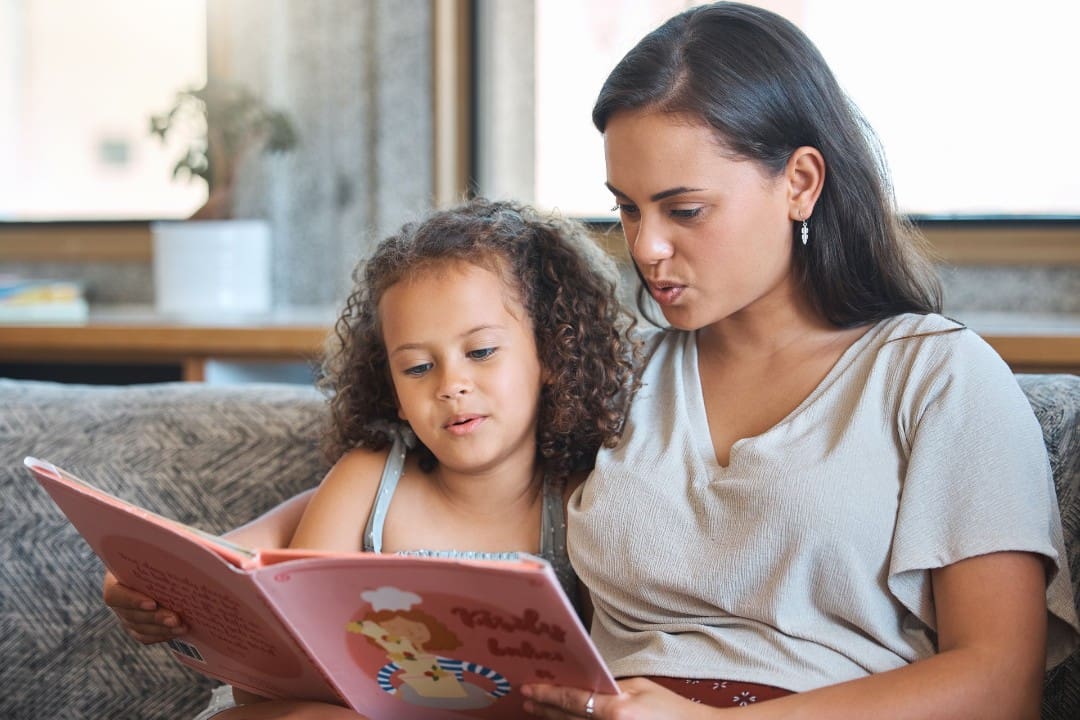
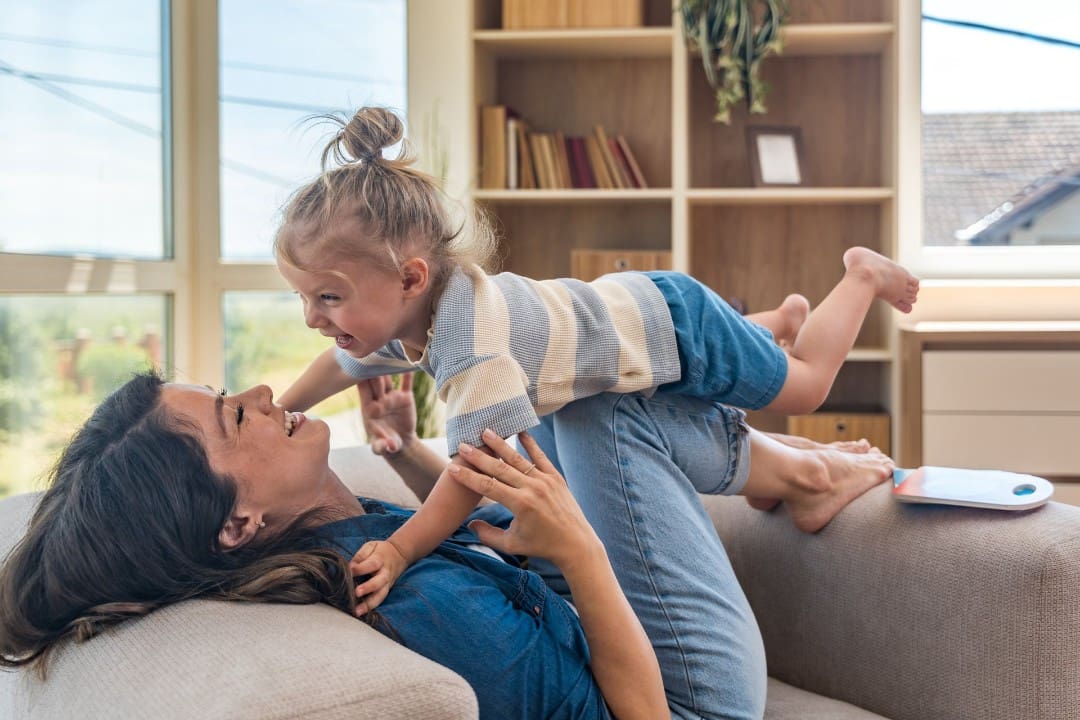
It doesn’t take grand gestures to build your child’s confidence. The way you communicate in ordinary moments, your warmth, your patience, your delight in your child’s ideas, shapes how your child feels about themselves more than any specific activity.
These small, repeated interactions are what builds a child’s self-esteem from the inside out:
- Tell your child you love them.
- Celebrate effort out loud.
- Make eye contact when they talk to you.
- Get down to their level.
- Ask about what they built or drew or pretended.
- Encourage your child to share what they feel.
When children know they are valued not for being perfect, but for being themselves, confidence grows naturally.
How Early Advantage Child Care Supports Confidence and Independence
A Program Built for the Whole Child
At Early Advantage, we take a whole-child approach to early childhood education because we know that academic and emotional readiness are built together, not separately. Our curriculum is designed to help children develop the independence, self-regulation, and sense of identity they need to succed in the classroom and beyond.
From our Toddler Child Care and Preschool Child Care programs through our Pre-K Child Care program, we intentionally build environments where children are invited to try, to fail safely, to problem-solve, and to succeed. Our teachers communicate warmth and high expectations, which helps children develop both healthy self-esteem and the motivation to keep learning.
We also believe that confidence-boosting is something that happens at home and at school together. That’s why we work in close partnership with families, sharing what children are working on, celebrating developmental milestones, and offering support for the moments in between.
Ready to Help Your Child Gain Confidence and Thrive?
The work you do now, every confidence-building conversation, every moment of encouragement, every chance to try new things, adds up to something your child carries with them into every school year that follows. You’re helping set your child up for success, not just in kindergarten, but for life.
We’d love to support your family on that journey. Schedule a tour of Early Advantage or contact us to learn more about enrollment and how our program helps children thrive from their very first days with us.