What Early Childhood Education Really Does for Your Child
When you think about your child's future, you want to give them every advantage possible. The decisions you make in those earliest years, from where your child spends their days to the quality of care and learning they receive, shape who they become as a student, a thinker, and a person.
The research is clear: early childhood education benefits children in ways that reach far beyond the preschool years. Children who attend quality early childhood education programs enter school better prepared, perform at higher levels throughout their academic journey, and carry the advantages of those early experiences with them for life.
How Preschool Affects Future Learning
Early Childhood Education Supports Cognitive Development
Brain development happens faster in the first five years of life than at any other time. During this window, children are wiring connections at a remarkable pace. The Center on the Developing Child at Harvard University explores how early experiences shape brain architecture in their foundational resource, Brain Architecture. The experiences, relationships, and environments children encounter during these years directly shape how their brains process information, regulate emotions, and approach challenges.
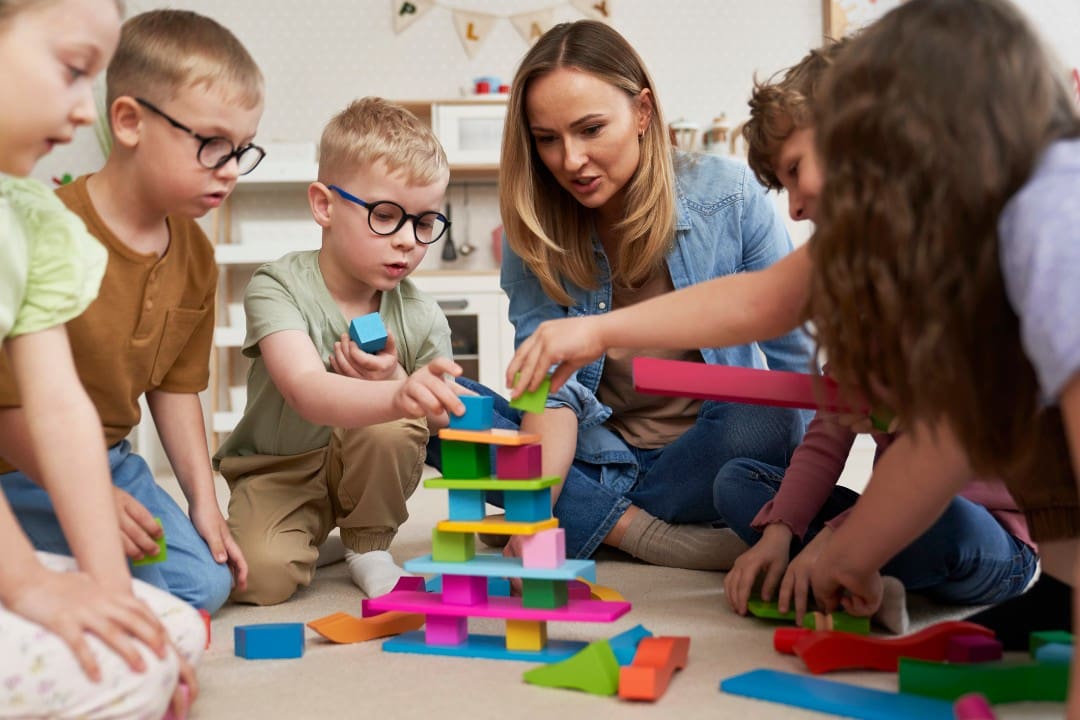
High-quality early childhood education takes full advantage of this window. Structured play, language-rich environments, and nurturing teacher relationships all support cognitive development in ways that leave lasting impressions. Children who receive this kind of intentional early education don't just learn facts. They learn how to learn.
Early Childhood Education Lays the Foundation for Academic Skills
Early childhood education lays the groundwork for academic skills long before a child ever sits at a school desk. The National Education Association outlines how high-quality preschool education directly supports later academic achievement in their article Quality Preschool Is More Than ABCs.
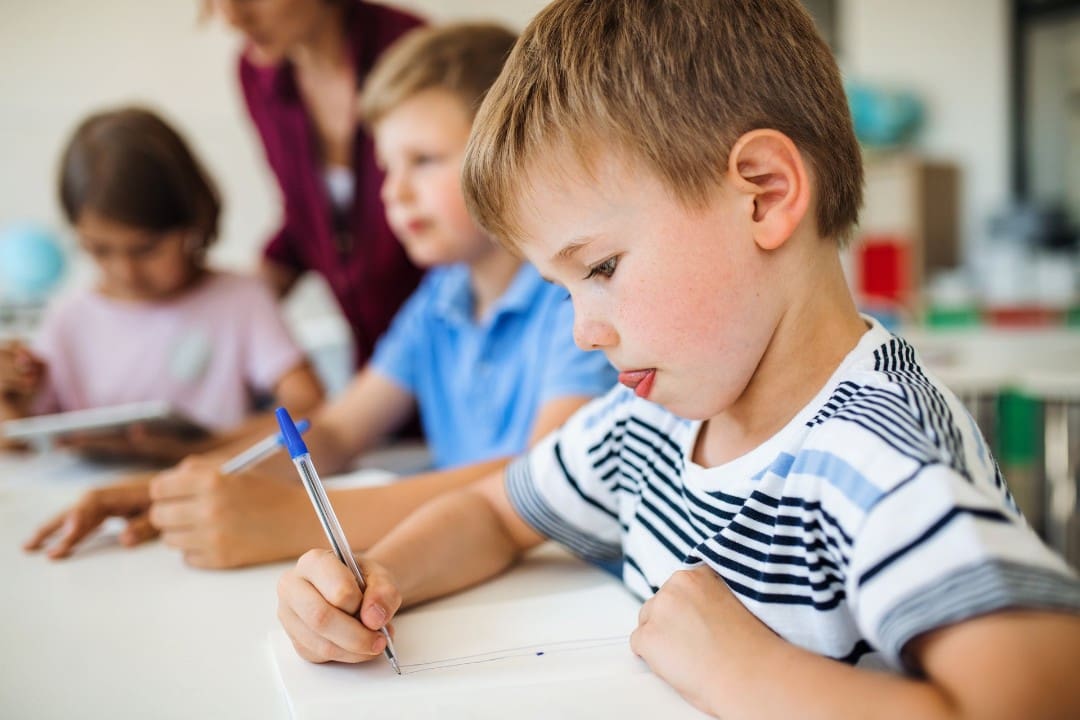
Programs teach children to hold a pencil, recognize letters, understand that words carry meaning, and grasp basic number concepts. When children arrive in kindergarten with those foundations in place, teachers can build rather than start from scratch.

Long-Term Effects of Early Childhood Education on School Readiness
School readiness isn't just about knowing ABCs. It's about being able to sit and focus, take turns, manage frustration, follow directions, and engage with peers and adults. Early education programs specifically build these skills so that children are prepared to succeed when they walk through that kindergarten door.
Research has shown "childcare programs help foster development and impact language and communication skills, social-emotional skills, motor skills, and cognitive abilities." Children who participate in high-quality early childhood education programs demonstrate stronger cognitive, social, and behavioral outcomes associated with school readiness compared to those without such experiences.
The Academic Impact of Early Childhood Programs
Children Who Attend Quality Programs Perform Better, Longer
One of the most significant findings in early education research is how persistent the effects on achievement really are. Children who receive high-quality early childhood education don't just have a good first year of school. They show better academic performance across grade levels, with higher rates of reading proficiency, stronger math skills, and greater overall academic achievement.
The National Institute for Early Education Research published a study called Long-Term Cognitive and Academic Effects of Early Childhood Education on Children in Poverty, which reviewed 38 studies tracking children from early education programs through their school years. The evidence consistently shows positive effects on academic skills that produce persistent effects on achievement and academic success reaching well into elementary, middle, and high school.
Rates of High School Graduation and Beyond
The long-term benefits of early childhood education extend all the way to high school graduation. One study found that children who received quality early education are more likely to graduate from high school and pursue higher education. The academic foundation built in those early years contributes directly to long-term outcomes, including improved socio-economic outcomes in adulthood.
Reducing Special Education Placement and Learning Gaps
High-quality early education also plays a meaningful role in reducing the number of children who later require special education placement. When children develop language, cognitive, and social skills during their early years, many learning challenges are identified and supported earlier, when intervention is most effective. Early education programs that address the whole child, cognitively, socially, and emotionally, help children develop the skills they need before gaps become barriers.
Why Early Childhood Education Matters for the Whole Child
Social and Emotional Development Sets the Stage
Academic success doesn't happen in isolation. Children learn best when they feel safe, connected, and emotionally regulated. Social and emotional development is at the heart of what quality early childhood education programs provide.
The Collaborative for Academic, Social, and Emotional Learning (CASEL) has documented how social and emotional learning in early childhood supports academic outcomes throughout school in their research overview, What Does the Research Say?. According to CASEL, "Students participating in SEL at school have higher levels of 'school functioning,' as reflected by their grades, test scores, attendance, and homework completion."
In a well-run early child care center, children practice sharing, resolving conflict, expressing their feelings appropriately, and building friendships. These aren't just soft skills. They're the skills that allow children to function in a classroom, collaborate with peers, and build the relationships that support them throughout school. Early childhood education also strengthens a child's understanding of the world and how they fit within it.
Developing Social Skills That Last a Lifetime
Social skills developed during early childhood carry children through every stage of life. Children who learn to cooperate, communicate, and empathize in their earliest years bring those abilities into every classroom they enter. Teachers notice the difference: students who can navigate social situations constructively stay more engaged, experience fewer behavioral disruptions, and form strong peer relationships that support their learning.
Research from the Robert Wood Johnson Foundation, Improving Social Emotional Skills in Childhood Enhances Long-Term Well-Being, confirms that strong social skills developed in early childhood are linked to better academic performance, higher graduation rates, and greater career success decades later.
At Early Advantage, our teachers lead classrooms where social development is woven into every part of the day, from circle time conversations to collaborative projects and outdoor play. Children learn alongside each other, which is exactly how children are built to grow.
Cognitive Abilities Grow Through Play and Exploration
Play helps young children learn how to think. When we allow children to explore, experiment, and imagine, we are actively supporting cognitive growth. The American Academy of Pediatrics published a clinical report, The Power of Play: A Pediatric Role in Enhancing Development in Young Children, which outlines how play-based learning supports cognitive development, language acquisition, and social skills in early childhood.
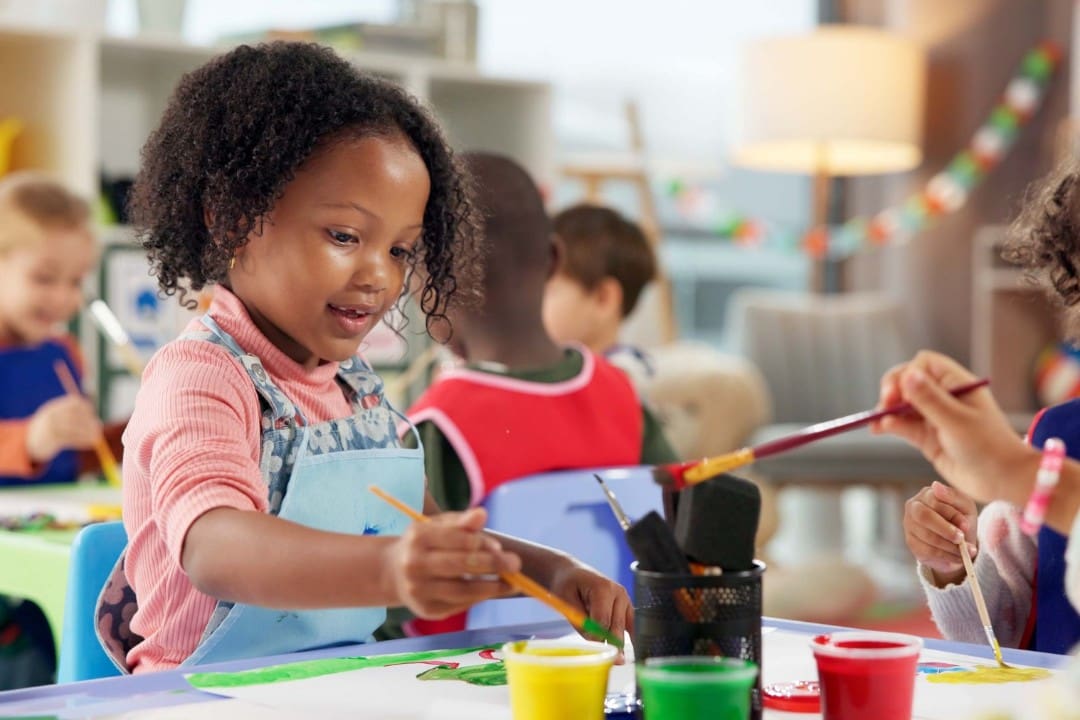
Educational apps and interactive games, hands-on materials, and thoughtful teacher guidance all enhance cognitive abilities during these critical years. Early childhood education programs at Early Advantage combine structured learning with open-ended exploration so children develop both foundational knowledge and the creative thinking that future academic challenges require.
The Role of Preschool in Child Development
Preschool Education and Academic Achievement Go Hand in Hand
Preschool education and academic achievement are closely linked. The RAND Corporation's research brief Proven Benefits of Early Childhood Interventions found that early childhood intervention programs have been shown to yield benefits in academic achievement, educational progression and attainment, and long-term success across other domains.
Benefits of Early Learning for School Readiness
The benefits of early learning for school readiness show up in various measurable ways. Children who attend quality early childhood education programs demonstrate stronger pre-literacy skills, better number sense, greater attention and self-regulation, and more developed language abilities than peers without early education experience. Teachers consistently report that children who received early education are better prepared to meet the demands of a kindergarten classroom.
How Early Education Programs Prepare Children for Academic Success
Early education programs introduce children to routines, expectations, and the rhythm of a school day. They help children build the attention span needed to engage in instruction, the vocabulary needed to understand academic content, and the confidence needed to take academic risks. That combination is what prepares children not just for kindergarten, but for the long-term academic success that follows.
Long-Term Benefits of Early Childhood Education: What the Research Shows
Children who receive access to quality early childhood education are more likely to meet or exceed grade-level expectations, participate in advanced coursework, and achieve higher academic performance throughout their school years. The evidence spans decades of research across diverse populations, and the conclusion is consistent: quality early childhood education initiatives produce lasting gains.
A widely cited longitudinal study, the Carolina Abecedarian Project, followed children from birth through adulthood and found significant, lasting gains in academic achievement, higher rates of college attendance, and better health outcomes for children who received high-quality early education compared to those who did not.

Early Advantage: Your Partner in Early Childhood Education
At Early Advantage, we offer more than child care. We offer a place where children develop, thrive, and discover what they're capable of. Our program is built around the understanding that early education matters in profound and lasting ways. Every teacher, every activity, and every interaction is designed with your child's healthy development as the goal.
Learn more about our approach to child development on our blog.
Ready to Give Your Child the Advantage?
We'd love to welcome your family to Early Advantage. Schedule a tour or contact our team today to learn more about enrollment and availability. We're here to help your child get the strong start they deserve.